
Buying a second home in Mexico: part-time living and the 180-day question
Buying a second home in Mexico requires separate decisions about property ownership and permission to stay. Do not treat the phrase '180-day rule' as a guaranteed calendar for part-time living. A qualified independent immigration professional can explain the current requirements for your intended travel pattern; qualified legal and tax professionals can review the ownership and transaction questions.
Table of Contents
- How long can Americans stay in Mexico?
- Choose the use pattern before choosing the property
- Understand what kind of property interest is being sold
- Evaluate the destination as a place to return to
- Account for the home while you are away
- Work through a calendar-first example
- Bring the lifestyle decision into the property comparison
- Frequently Asked Questions
The useful starting point for buying a second home in Mexico is the life you expect to live there. Will you return for a familiar seasonal routine, make occasional visits, or eventually spend much more time in the country?
Those choices affect destination fit, the property category, and how the home operates while you are away. They also raise a separate immigration question that a purchase cannot answer for you. The goal is to compare the lifestyle and the responsibilities together, rather than let an appealing home determine a travel plan that has not received independent professional review.
How long can Americans stay in Mexico?
The answer for your travel plans belongs with a qualified independent immigration professional using current official requirements. A phrase such as '180-day tourist visa in Mexico' is not enough to establish the permission applicable to a particular traveler or trip.
For second-home planning, separate the dates you would like to spend in Mexico from the dates your immigration arrangements allow. Treating those as the same thing can make a property look suitable before the travel plan has been evaluated.
Useful questions for an immigration consultation include:
- Which current entry or residency requirements apply to the intended pattern of visits?
- How is the permitted stay established and documented?
- How should repeated visits or a shift toward longer-term living be evaluated?
- What activities require separate consideration beyond personal vacation use?
The purpose is not to choose an immigration route from a property brochure. It is to understand whether the intended calendar has a sound basis before that calendar becomes the reason for buying.
This article provides general education, not immigration, legal, tax, financing, insurance, medical, or investment advice. Personal circumstances require appropriately qualified independent professionals.
Choose the use pattern before choosing the property
A vacation home in Mexico can be primarily a place to return to, primarily a rental operation, or a combination. These are different lifestyle objectives, even when the same property could be considered for each.
Personal use puts your preferred dates and comfort first. Rental-oriented use makes guest access, operating arrangements, and the effect of owner stays part of the comparison. A mixed-use plan needs an explicit priority when those interests conflict.
These descriptions are planning categories, not legal or tax classifications. A qualified professional should evaluate how the actual ownership and use are treated.
| Intended use | Main priority | Calendar trade-off | Operating focus |
|---|---|---|---|
| Personal second home | A familiar place available for your visits | Your dates come first, even when the home is otherwise empty | Care of the property during absences |
| Rental-oriented property | A property operated for guest use | Owner visits may compete with guest bookings | Guest service, management, and documented rental permissions |
| Mixed personal and rental use | Personal enjoyment with some guest use | A clear rule is needed when owner and guest dates overlap | Booking control, turnover, owner storage, and expenses |
Decide what happens when the dates collide
Say you want the home for the same season every year, but a rental estimate assumes that season is available to guests. Those are competing uses of the same calendar.
A lifestyle-first comparison reserves the desired personal dates before evaluating any rental proposal with qualified professionals. If the purchase only seems workable when you give up those dates, it may not serve the original second-home objective.
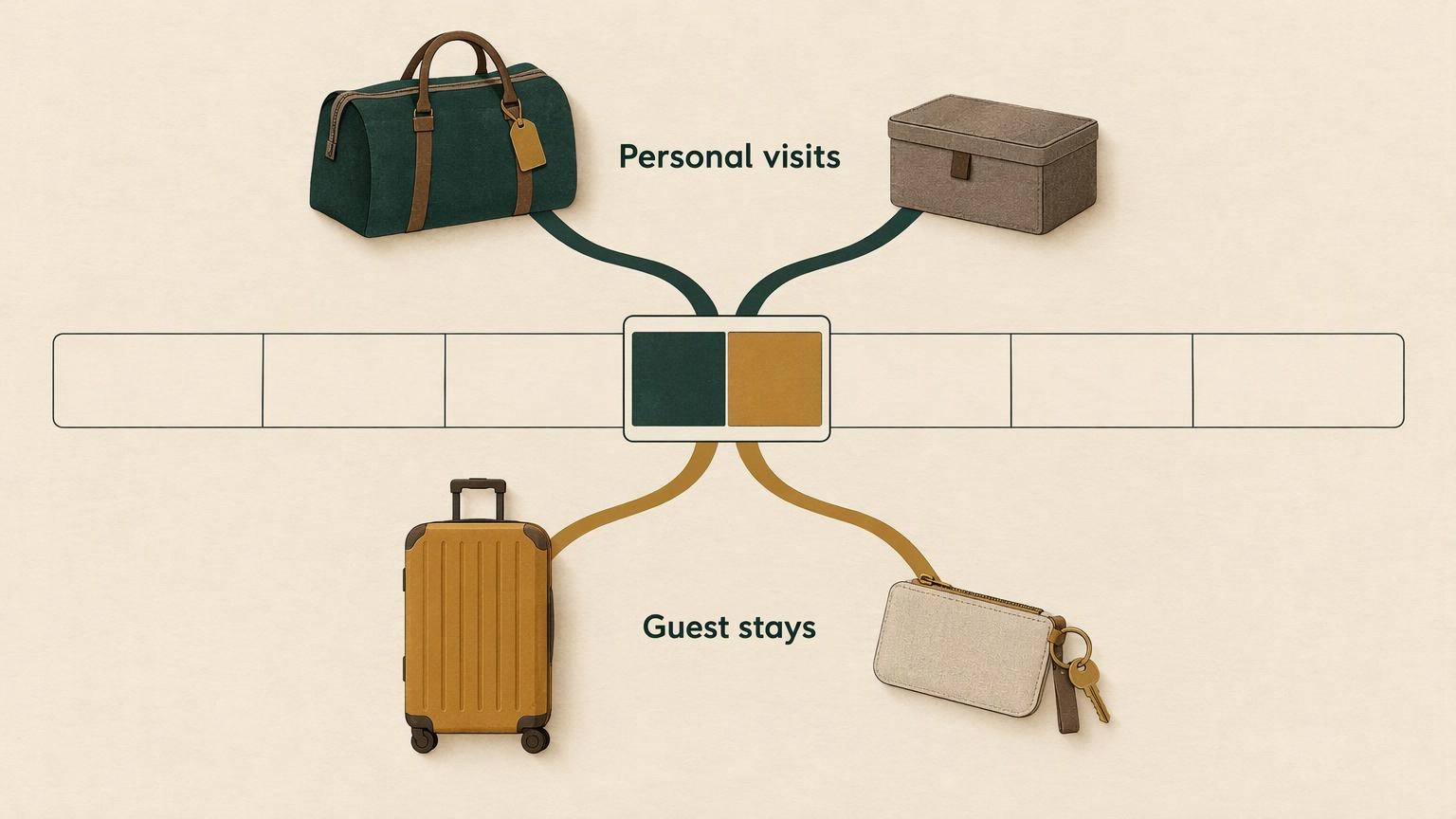
Illustration of personal visits and guest stays converging on the same planning area, with green and gold blocks side by side on an unnumbered strip.
Understand what kind of property interest is being sold
Full ownership, fractional interests, timeshares, and land are different products. Marketing language about a 'home in Mexico' does not establish the rights, usage limits, recurring obligations, or exit arrangements.
Americans can own property in Mexico. The ownership structure depends on location and circumstances, including special structures in restricted coastal and border zones; qualified independent legal and tax professionals should review any transaction.
The comparison below identifies the document questions that distinguish the products. It does not establish the terms of any particular offering.
| Product | Rights to establish | Usage to establish | Fees and obligations | Exit to establish |
|---|---|---|---|---|
| Full ownership | The ownership structure and the interest being transferred | Personal use and any community or rental restrictions | Property-specific expenses and any shared obligations | Transfer conditions and transaction requirements |
| Fractional interest | The exact share or contractual interest acquired | Allocation of dates, exchanges, and booking priorities | Shared expenses, management charges, and special assessments | Transfer restrictions and the process for selling the interest |
| Timeshare | Whether the product is an ownership interest or a contractual use right | Reservation rules, eligible dates, and any exchange arrangements | Recurring charges and the terms governing changes | Cancellation, transfer, and resale provisions |
| Land | The legal interest, title position, and permitted use | Whether the parcel supports the intended project | Documented ownership obligations and any development-related costs | Transfer conditions and implications of unfinished plans |
Compare access to the home, not only the purchase description
A limited-use arrangement might fit someone who wants defined visits without seeking exclusive year-round control. It may fit poorly if that person expects to arrive whenever plans change.
Land creates a different task: evaluating a future project rather than choosing an existing place to stay. None of these products carries a promise of returns or resale, and their terms need independent legal review.
Evaluate the destination as a place to return to
The best fit for a second home depends on what you want ordinary days to look like. A destination that suits a vacation itinerary may not suit recurring errands, familiar social routines, or quiet time at home.
Puerto Vallarta has a mountain-framed bay, an established international community, neighborhood character, and everyday city services. Those details make it a useful starting point for someone whose second-home plans extend beyond a resort setting.
Los Cabos combines desert landscape and the Sea of Cortez with marina life, golf, polished amenities, and strong links to the United States. Those characteristics point toward a different lifestyle comparison, particularly when those activities are central to the intended visits.
Neither description establishes the suitability of a particular property. Evaluate the exact neighborhood and building against the routines that matter to you, including the practical journey from your U.S. home.
Experience the routine you expect to repeat
During a visit, leave space for ordinary tasks rather than filling every day with attractions. Notice how you feel about shopping, getting around, spending an evening at home, and finding the community activities you would return for.
Healthcare, insurance, safety, and personal health questions need their own current information and qualified professional input. General destination appeal is not evidence of access to a particular service or coverage for your circumstances.
A second home works as a lifestyle choice when you want to repeat the ordinary days, not only the memorable outings. That is a more useful test than deciding which destination has the strongest vacation image.
Account for the home while you are away
Part-time ownership includes periods when you cannot handle problems in person. The operating plan deserves the same attention as the layout and the view.
Work through an ordinary absence: who has access, who can authorize a repair, how you learn about a problem, and what record shows that work was completed. A promise of 'lock-and-leave' convenience needs a clear explanation of those responsibilities.
Separate routine care from guest management
Caring for an empty home and operating a guest stay are different jobs. A property-care arrangement should explain inspections, access, repair authorization, and communication; a guest-management arrangement also needs to address reservations, arrival support, turnover, and owner-use dates.
For mixed use, clarify where personal belongings stay and how the property is returned to owner use. Written responsibilities make the comparison more concrete than a broad assurance that management is included.
Build an expense picture without depending on rental promises
Compare documented recurring expenses separately from hoped-for rental receipts. Relevant categories include maintenance, management, utilities, shared charges, and professionally reviewed insurance and tax obligations, as applicable to the property.
A property that fits only when assumed rental receipts cover every expense deserves a different evaluation from a personally funded second home. Rental income and returns are not guaranteed, and any projection needs reliable, dated support and qualified professional review.
The honest downside of a familiar home is the responsibility that remains between visits. That responsibility may be worthwhile, but it should be part of the decision rather than a surprise after purchase.
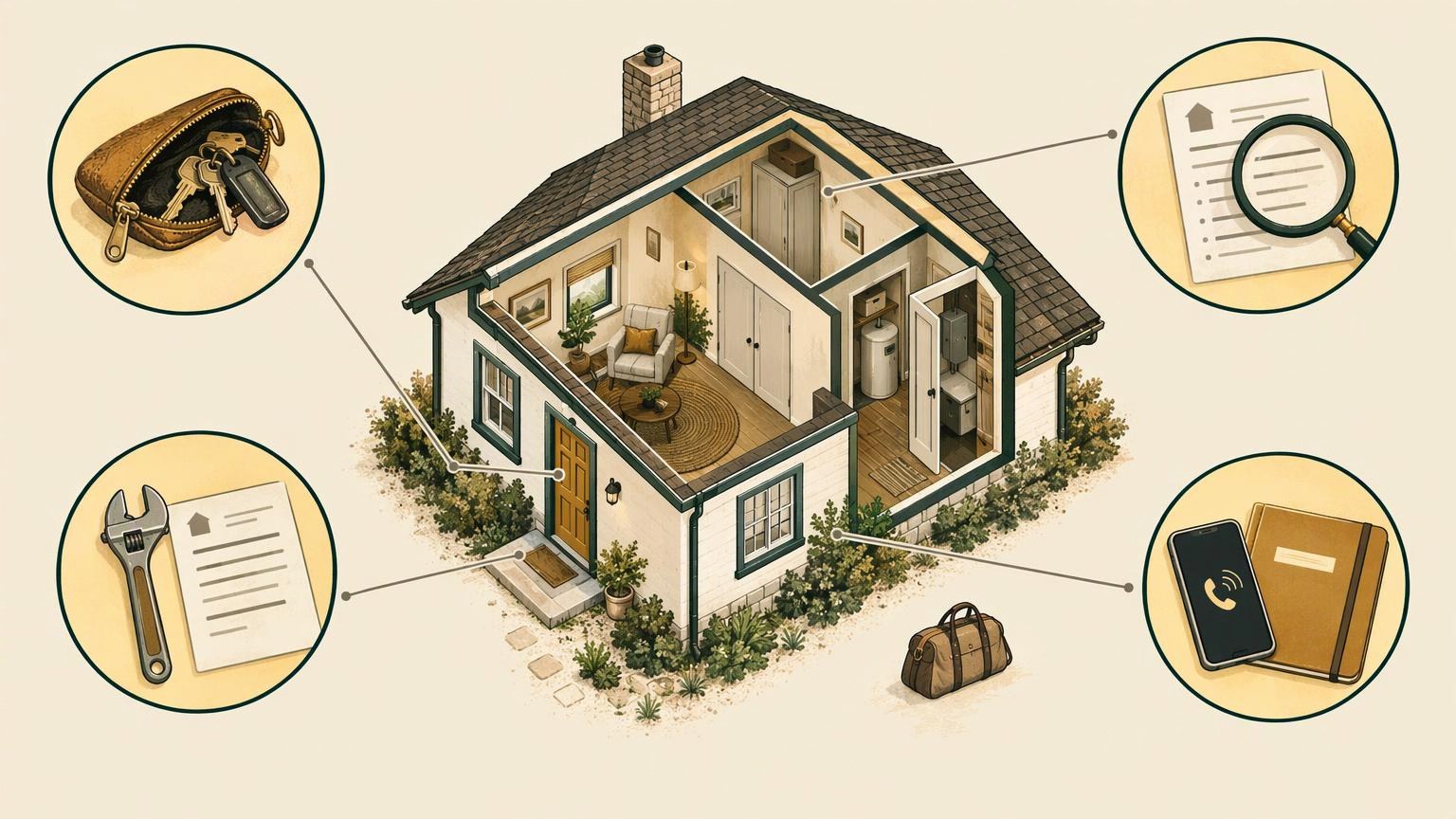
Illustration of a furnished home cutaway linked to access, inspection, repair and communication symbols, with a travel bag outside.
Work through a calendar-first example
Say you keep your primary home in the United States and want a recurring seasonal stay in Mexico. You value familiar surroundings and the ability to leave personal belongings behind, but family commitments sometimes change your arrival and departure plans.
A personally used home fits the preference for familiarity. Its trade-off is that ownership expenses and property care continue even when a planned visit is shortened or canceled.
Renting for individual visits keeps the accommodation commitment tied more closely to each trip. The trade-off is less continuity: the same home may not be available for the next visit, and personal storage or customization depends on the arrangement.
A limited-use product could be relevant only if its documented access rules fit the changing calendar. A shared or reserved-use arrangement should not be treated as interchangeable with unrestricted access to a personally controlled home.
For this reader, flexibility matters as much as familiarity. If reliable access on changing dates is essential, the comparison should give that requirement substantial weight; if the travel pattern itself is still changing, renting may remain a useful way to learn what the recurring routine actually is.
Immigration review remains separate whichever accommodation option is considered. The lifestyle comparison can identify the preferred arrangement, but it cannot establish permission to stay.
| Option | Lifestyle fit | Trade-off |
|---|---|---|
| Personally used home | Familiar surroundings; personal storage | Expenses and care continue between visits |
| Renting per visit | Accommodation commitment tied to each trip | Same home may not be available next time |
| Limited-use product | Fits if access rules suit your calendar | Shared or reserved access has limits |
Bring the lifestyle decision into the property comparison
Once the intended use is clear, a property comparison becomes more specific. A personal second home needs attention to owner access and absence care; a rental-oriented property needs a supported operating review; a mixed-use home needs a workable rule for competing dates.
This article's comparison framework brings together property type, use, management, and exit considerations. Keeping those elements distinct helps you weigh lifestyle appeal alongside the responsibilities of ownership.
The Golden Life provides destination and property guidance for Americans considering Mexico, based on objectives, budget, timing, access, wellness, and community priorities. Its Buy a Second Home or Invest in Mexico hub connects that guidance to second-home and investment interests. This role does not replace independent immigration, legal, tax, technical, or financial review.
If you are ready to describe those priorities, the Find your place is a way to send an inquiry about destination and property direction. It does not imply approval, financing terms, or property availability.