
Fractional home ownership in Mexico: how it works, pros and cons

Fractional home ownership in Mexico generally means acquiring a share connected to a property and sharing its use, expenses, and decisions under an agreement. Its appeal is a smaller ownership commitment than buying the same home outright. The trade-off is less control over stays, spending, and exit. The actual rights depend on the documents and Mexico-specific ownership structure, not the marketing label.
Table of Contents
- Compare full ownership, fractional ownership, timeshare, and land
- How does fractional ownership work beyond the sales label?
- Will the calendar fit how you actually visit Mexico?
- What are the financial benefits and downsides of sharing?
- How can you get out of fractional ownership?
- A seasonal-use example: when sharing fits and when it does not
- Connect lifestyle fit with independent property verification
- Frequently Asked Questions
Fractional home ownership can make sense when you want a recurring Mexico base but do not need a home available whenever you choose. It is a different proposition when your goal is year-round relocation, unrestricted family visits, or income you depend on.
Start with the comparison below, then separate the ownership interest from the calendar and operating agreement. For the wider decision, The Golden Life's second-home and investment framework for Mexico connects property choice with personal use, management, and exit considerations. This article is general educational information, not legal, tax, financing, or investment advice.
Compare full ownership, fractional ownership, timeshare, and land
These products solve different problems. The table describes general categories, not the terms of a particular Mexican property; the documents determine the rights, obligations, and transfer conditions.
| Property path | Rights | Usage | Fees and obligations | Exit |
|---|---|---|---|---|
| Full ownership | Ownership of the whole property through the applicable structure; property and community rules still matter. | No co-owner booking rotation, but occupancy and rental rules may apply. | Responsibility for the whole property's operating, maintenance, and other applicable costs. | Sale or transfer subject to the structure and applicable requirements; timing and price are not guaranteed. |
| Fractional ownership | A shared ownership interest whose connection to the property must be established in the documents. | Allocated stays under a shared calendar, with agreement-specific booking and guest rules. | Shared operating costs plus any management charges and additional contributions defined by the agreement. | Transfer of the interest under agreement-specific conditions; a resale buyer is not guaranteed. |
| Timeshare | A defined stay entitlement under the particular product; the label alone does not establish property equity. | Use under fixed, floating, or other contract-defined reservation arrangements. | Purchase and recurring obligations depend on the contract; nonuse may not end payments. | Transfer, surrender, or termination depends on the contract; resale is not guaranteed. |
| Land | An interest in a parcel through the applicable ownership structure, rather than a ready-to-use home. | Residential use depends on the parcel's permitted use, access, services, and any construction requirements. | Holding costs and possible servicing or construction expenses require separate evaluation. | Sale or transfer of the parcel interest; buildability and market demand require independent review. |
| Property path | Rights & use | Ongoing costs | Exit |
|---|---|---|---|
| Full ownership | Whole property; no booking rotation | Whole-property operating costs | Sale; timing and price not guaranteed |
| Fractional ownership | Shared interest; allocated stays | Shared costs; agreement-defined charges | Transfer per agreement; buyer not assured |
| Timeshare | Stay entitlement; equity not established | Contract-defined; nonuse may not end fees | Contract-defined; resale not guaranteed |
| Land | Parcel; use depends on permits/services | Holding; possible servicing/building costs | Parcel transfer; review market demand |
How does fractional ownership work beyond the sales label?
A fractional arrangement connects a shared interest with rules for using and operating a home. Ownership, occupancy, and management are related, but they are not interchangeable.
For Mexico, the ownership structure depends on location and circumstances, including special structures in restricted coastal and border zones. Qualified independent legal and tax professionals are needed to evaluate the actual transaction.
The interest you acquire
The starting question is what is being transferred and how that interest connects to the property. A description such as co-ownership does not, by itself, establish who holds the property, what the buyer receives, or which obligations accompany the interest.
That distinction matters in a fractional ownership vs. timeshare comparison. A stay entitlement is not proof of property equity, and an ownership interest is not proof of unrestricted occupancy.
The agreement that turns ownership into stays
The operating documents explain how owners reserve time, share expenses, make decisions, and transfer their interests. A share size alone does not establish which holidays you receive, how long you can stay continuously, or whether unused time carries forward.
The useful evidence is the relationship between the ownership documents and the use rules. Independent professional review addresses their meaning and enforceability; lifestyle evaluation addresses whether those rules fit the life you want.
Will the calendar fit how you actually visit Mexico?
Fractional ownership is most appealing when its allocated stays match your travel habits. A substantial annual entitlement can still be a poor fit if it is divided into visits you cannot use.
Compare desired travel dates with the booking rules, rather than treating total time as the only measure of value. Holiday access, consecutive stays, advance planning, and cancellation rules can change the practical result.
For a seasonal retirement base, the ability to stay continuously may matter more than scattered vacation periods. For a family with a rigid travel calendar, the important issue may be access to the same school-break dates each year.
- How are competing requests for popular dates resolved?
- Can an owner reserve consecutive stays, and what limits apply?
- What happens to unused or canceled time?
- Can guests use a booked stay without the owner present?
Full ownership avoids the co-owner booking rotation, although property and community restrictions still matter. Renting may better suit someone who wants to change destinations or travel dates without a continuing ownership obligation.
The downside of fractional ownership is real: you can own an interest in a home that is unavailable when you want it. A calendar that works on paper deserves the same attention as the property itself.

Illustration comparing separated allocated stays with a continuous desired visit using gold and green blocks, alongside a travel bag and folded landscape sketch.
What are the financial benefits and downsides of sharing?
The financial appeal is sharing the acquisition and upkeep of the same property rather than carrying them alone. That does not establish that a fractional interest is inexpensive, cheaper than renting, or a good investment.
A useful comparison separates the initial commitment from recurring expenses and less predictable obligations. The purchase amount cannot explain the whole ownership burden.
Shared costs are still continuing costs
Operating expenses can include maintenance, utilities, cleaning, insurance, and management, depending on the arrangement. The agreement and current budget establish which categories apply and how they are allocated.
Unused stays do not necessarily reduce those obligations. There may also be separate provisions for reserves, major repairs, replacements, or additional owner contributions.
A meaningful cost comparison considers the property you would otherwise buy or rent and the stays you can realistically use. Comparing a share with the price of a whole home, without accounting for reduced access and continuing charges, answers only part of the question.
Management reduces tasks, not accountability
When management is included, owners may have fewer day-to-day tasks. The service agreement determines the scope, response standards, authority, and charges; the word managed does not establish all of those details.
Shared decisions can also limit personal control. Renovations, furnishings, guest use, and spending may require a process rather than an individual owner's preference.
The practical issue is how routine and exceptional decisions are handled. A management arrangement works differently when owners can review expenses and replace a manager than when those powers are limited.
How can you get out of fractional ownership?
Exit generally means transferring the interest through the process defined by the agreement. The ability to transfer is different from finding a buyer, obtaining an acceptable price, and completing the transaction.
Transfer provisions may address notice, approvals, an existing owner's opportunity to buy first, marketing arrangements, or charges. Whether any of those provisions applies requires review of the particular documents.
There is also a distinction between selling your share and selling the underlying home. An owner seeking to leave may not have authority to trigger a whole-property sale.
For planning purposes, continuing obligations matter during the marketing period. An exit discussion is incomplete if it covers advertising the share but not payments, use rights, and management while it remains unsold.
Evidence of completed transfers would be more useful than an assurance that resale is easy. Any resale history, valuation, or projected timing needs a reliable, dated basis, and it cannot establish what a future buyer will pay.
Fractional ownership does not guarantee liquidity or appreciation. Someone who needs a predictable release of capital may find that uncertainty more significant than the convenience of a shared home.
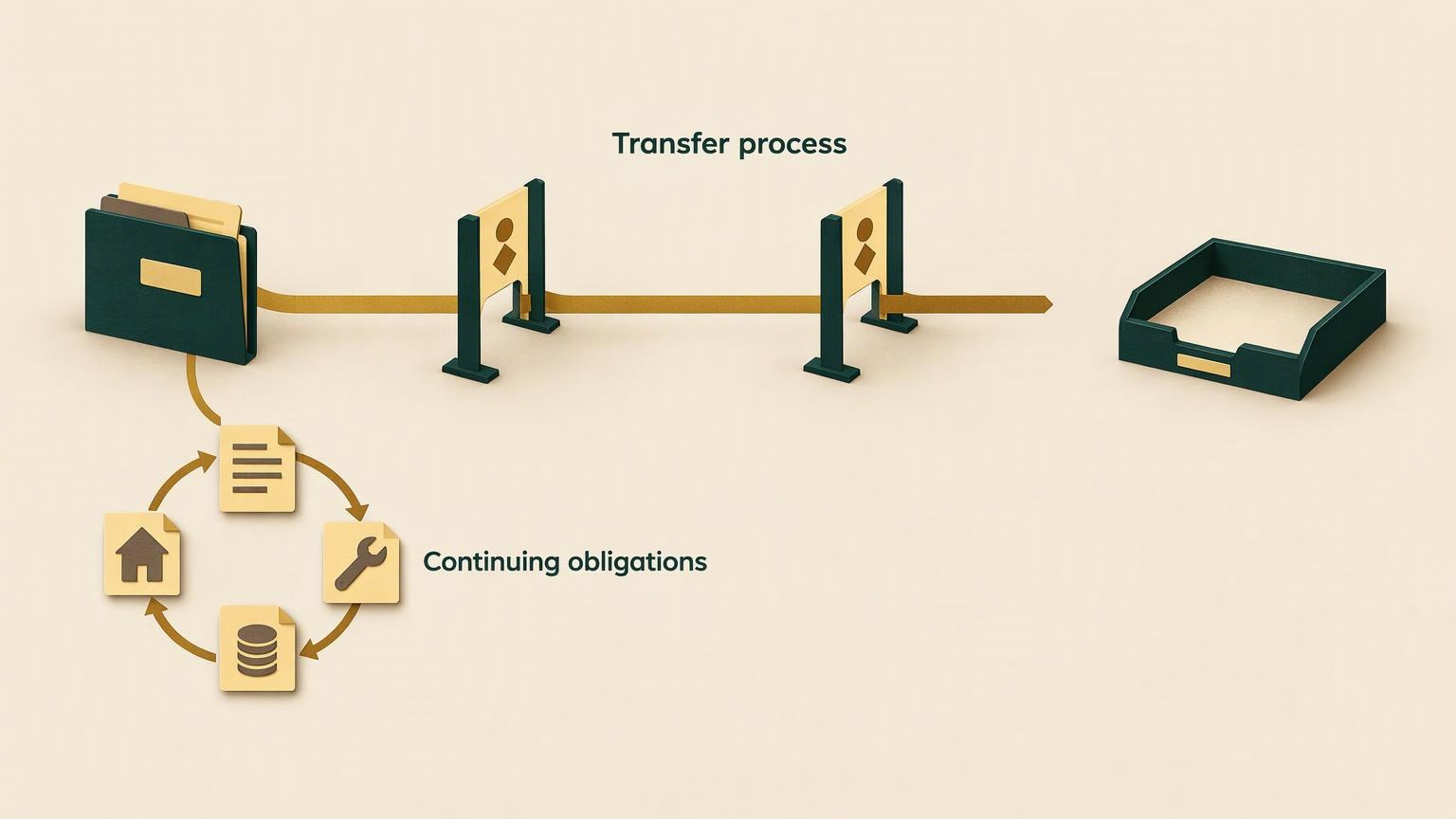
Cut-paper illustration labeled Transfer process and Continuing obligations: a route stops short of an empty tray, while a lower loop links house, document, wrench and coin icons.
A seasonal-use example: when sharing fits and when it does not
Say you want to return regularly to Puerto Vallarta, where an established international community, neighborhood character, and everyday city services appeal beyond the vacation experience. You are comparing a recurring second-home base with a possible later relocation.
If your travel dates are flexible and you are comfortable with shared decisions, a fractional arrangement could fit your current use. Its value would depend on access to the stays you want and an operating budget you can evaluate, rather than simply the size of the interest.
If your priority is an extended uninterrupted stay, the calendar becomes the deciding issue. Full ownership or a suitable rental may better match that need, even if sharing initially appears attractive.
If you are still deciding whether the destination works for ordinary life, renting leaves more room to change direction. Land answers a different question: it introduces a parcel and possible building process, not immediate access to a completed home.
The choice follows from use and commitment. A fractional interest can be worth investigating for recurring, flexible visits, but it is a weaker fit when you need unrestricted occupancy or are still testing where to live.
Connect lifestyle fit with independent property verification
The Golden Life begins with your objective, then compares destination and property fit through budget, timing, access, wellness, and community priorities. For fractional ownership, that approach helps separate a desire for recurring stays from a need for a permanent home or an income-oriented property.
Once you can describe that use, The Golden Life's Find your place lets you share your priorities and send an inquiry. It does not establish property availability, transaction approval, financing terms, or suitability of a particular agreement.
A useful next stage distinguishes lifestyle questions from transaction questions. Experiencing ordinary routines and travel logistics helps evaluate personal fit; independent professionals evaluate the ownership documents, technical condition, financial obligations, and other material facts.
A property visit cannot prove title or legal rights, just as a document review cannot show whether the permitted stay pattern feels workable. Both kinds of evidence matter before a shared home becomes a serious choice.
For an inquiry about destination and property direction, contact The Golden Life with your intended use and the issue that could change your choice. A rigid calendar, a possible future relocation, or concern about continuing costs is more informative than a broad request for a good investment.