
How much are closing costs in Mexico, and what affects the timeline?

Closing costs and the time needed to buy property in Mexico depend on the property, location, ownership structure, financing, and transaction requirements. A useful estimate separates each expense and identifies what must happen before closing. Qualified independent legal, tax, and financial professionals can establish the applicable figures and explain the schedule for a particular purchase.
Table of Contents
A purchase price does not answer the full budget question. For an American considering property in Mexico, the relevant comparison includes transaction expenses, any financing requirements, and the timing of independent due diligence.
That distinction matters whether the objective is retirement, relocation, a second home, or investment. The Golden Life's second-home and investment guidance provides the broader planning context. The table below keeps the narrower closing question separate: what needs to be established at each stage, and which dependencies affect the schedule. This is general educational information, not legal, tax, financing, or investment advice.
Separate the budget and schedule by purchase stage
A useful purchase estimate connects expenses to the work they cover. A useful schedule identifies the information, review, or approval needed before the next stage can proceed.
The stages below are planning categories, not a mandatory legal sequence. Qualified independent professionals can explain the order and requirements that apply to a particular transaction.
| Purchase step or budget category | Published cost range and scope | Timing information and dependencies | Named source, date, and evidence limits |
|---|---|---|---|
| Evaluate the property and transaction requirements | No supported range established here for legal or technical review expenses. Currency and applicable charges depend on the transaction. | Availability of property information and completion of independent due diligence; no supported duration established here. | The cited Frank Ruiz Realty Group guide does not quantify these review expenses. Qualified independent legal and technical professionals can explain transaction-specific requirements. |
| Clarify the ownership structure and any trust setup | $500 to $1,000 USD for fideicomiso setup, as reported by the source. This is a trust-setup range only, not a nationwide closing-cost estimate or a statement that every purchase requires a trust. | The applicable structure depends on location and circumstances, including special structures in restricted coastal and border zones. The source identifies trust setup as a financing-timeline dependency but provides no separate setup duration. | Frank Ruiz Realty Group, Cross Border Mortgage Mexico: Your Complete 2026 Guide, August 3, 2026: https://frankruizrealtygroup.com/cross-border-mortgage-mexico-guide/. Qualified independent legal and tax professionals can explain the applicable structure and expenses. |
| Separate ongoing trust expenses from closing expenses | $1,000 to $2,000 USD in annual trust maintenance fees, as reported by the source. These are ongoing ownership expenses, not one-time setup charges or total closing costs. | Annual expense category; not a purchase-completion interval. | Frank Ruiz Realty Group, Cross Border Mortgage Mexico: Your Complete 2026 Guide, August 3, 2026: https://frankruizrealtygroup.com/cross-border-mortgage-mexico-guide/. The range does not establish the fee applicable to a particular trust. |
| Evaluate financing, if relevant | No supported financing-fee range established here. Financing may be available for qualified U.S. buyers through licensed providers. Eligibility, property requirements, underwriting, rates, terms, fees, and approval apply. | The source describes a typical 60 to 90 days from financing application to closing, depending on document completion, property title status, seller responsiveness, and trust setup. This is not a universal purchase timeline or an approval guarantee. | Frank Ruiz Realty Group, Cross Border Mortgage Mexico: Your Complete 2026 Guide, August 3, 2026: https://frankruizrealtygroup.com/cross-border-mortgage-mexico-guide/. Its financing interval does not establish the duration of a cash purchase or the full period beginning with a property search. |
| Reconcile the closing budget and remaining schedule | No supported total closing-cost range established here. The cited trust figures do not establish acquisition taxes, notarial charges, registration expenses, other transaction charges, or their combined total. A dated, itemized transaction estimate distinguishes currency, amounts already paid, and amounts still due. | Completion of required reviews and remaining transaction requirements; no supported universal closing duration established here. | The cited Frank Ruiz Realty Group guide does not establish a complete closing-cost range. Qualified independent legal, tax, and financial professionals can explain applicable charges and the transaction-specific schedule. |
Your purchase budget and schedule sit within a broader question: which destination and property fit the life you want in Mexico?
Read the total alongside its assumptions
A closing-cost estimate is easier to evaluate when it distinguishes the purchase price from transaction expenses and any financing expenses. It should also distinguish amounts already paid from amounts still due, so the same expense is not counted twice. The total cost of a purchase and the amount remaining to be paid answer different questions.
That distinction matters when you compare estimates prepared at different stages. An earlier estimate might describe the expected transaction expenses, while a later statement might focus on the unpaid balance. A smaller later total does not necessarily mean the purchase has become less expensive. It may reflect payments already made rather than a reduction in charges.
For a discussion with qualified professionals, the useful details are the date, currency, expense description, calculation basis, and whether the amount is an estimate or a confirmed charge. These details explain what a figure represents. They also make it possible to distinguish a genuine change in an expense from a change in how the estimate is presented.
Currency is part of that comparison, not merely a label beside the total. Amounts expressed in different currencies cannot be compared directly. If an estimate includes a converted amount, its stated conversion basis helps explain the relationship between the original charge and the displayed figure. A converted planning estimate is not, by itself, confirmation of the amount ultimately payable.
An estimate also has a scope. A total that includes transaction expenses but excludes financing expenses is not directly comparable with a total that includes both. Similarly, an expense associated with completing the purchase serves a different budgeting purpose from an ongoing ownership expense. Keeping those categories distinct helps you understand what the closing total covers without treating it as the complete cost of owning the property.
Ownership deserves separate attention. Americans can buy property in Mexico, but the ownership structure depends on location and circumstances, including special structures in restricted coastal and border zones. Qualified independent legal and tax professionals should explain the applicable structure and its implications for any transaction. A general estimate for another property cannot establish the structure or expenses applicable to yours.
Financing may be available for qualified U.S. buyers through licensed providers. Eligibility, property requirements, underwriting, rates, terms, fees, and approval apply. Financing is not guaranteed, and a discussion of potential financing is not an approval. For budgeting purposes, potential financing and confirmed transaction information therefore remain distinct.
The useful comparison is not simply which estimate has the lowest headline total. It is whether the estimates describe the same expenses, use comparable assumptions, and clearly identify what remains uncertain. This is general educational information, not legal, tax, or financial advice. Transaction-specific interpretation belongs with appropriately qualified independent professionals.
A closing-cost total helps frame transaction expenses, but destination and property fit remain a separate part of your decision.
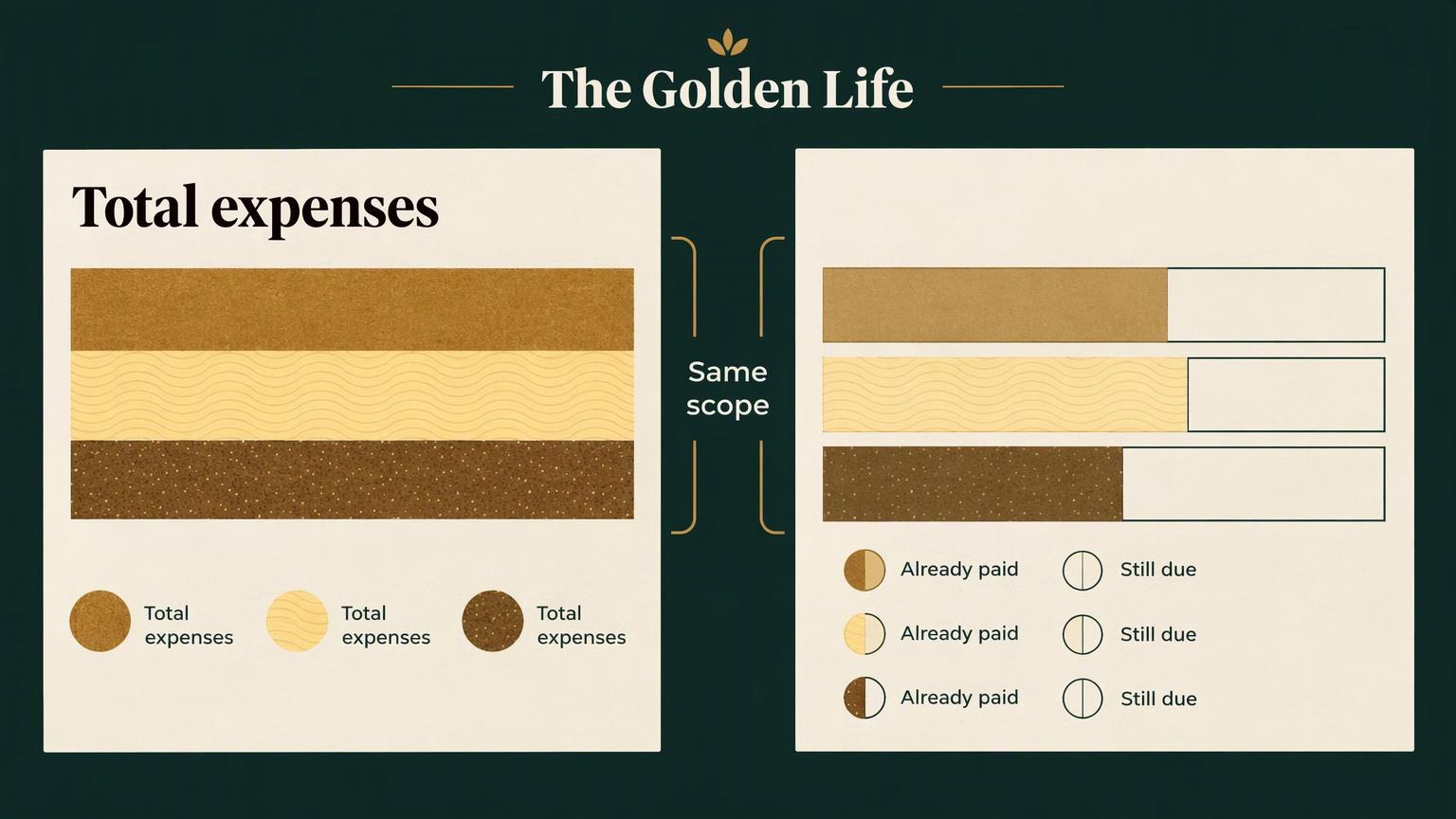
Illustration comparing total expenses with already-paid and still-due portions across three textured bands, linked by a “Same scope” bracket.
Distinguish a target date from a dependable schedule
A proposed closing date is a planning target. Its usefulness depends on whether the remaining requirements have been identified and whether the people responsible for them have confirmed their part of the schedule. A date can express the desired outcome without establishing that the work needed to reach it is complete.
Say you are comparing a cash purchase with a purchase that depends on financing. The cash option does not require financing approval, but independent property review and ownership questions still matter. The financed option also depends on buyer eligibility, property requirements, documentation, underwriting, and approval.
If the property information still needs review, cash alone does not establish a dependable closing date. If the property review is complete but financing approval remains outstanding, the financing decision becomes a separate timing dependency. The relevant comparison is the work still needed, rather than an assumption that either route has a standard completion time.
This also explains why the starting point matters when reading a timeline. A schedule measured from an initial discussion describes a different interval from one measured after relevant documentation is available. Without a clear starting point and endpoint, an apparently shorter timeline may simply leave out work included in another estimate.
Progress is more informative when it describes a completed requirement rather than activity alone. Providing information for review is not the same as completing the review. Likewise, discussing potential financing does not establish approval. Those distinctions help you understand why a schedule may remain conditional even when substantial preparation has taken place.
The budget and schedule can also change together. If an estimate assumes a particular ownership structure or financing route that is still open, both the expense total and the proposed date remain dependent on that assumption. A more developed schedule makes those dependencies visible; it does not guarantee that every remaining step will finish as anticipated.
For your broader planning, destination fit and transaction readiness are separate decisions. A place may suit your intended everyday life while a particular purchase still requires independent review. Conversely, a transaction's proposed timing does not establish that the destination or property suits your priorities.
The Golden Life starts with your objective and compares destination and property fit using budget, timing, access, wellness, and community priorities. Its Find your place lets you share your priorities and send an inquiry. That planning step does not establish closing costs, financing terms, approval, or property availability.
| Requirement | Cash purchase | Financed purchase |
|---|---|---|
| Property review | Independent review still matters | Independent review still matters |
| Ownership | Depends on location and circumstances | Depends on location and circumstances |
| Financing approval | Not required | Required; not guaranteed |
| Closing date | Cash alone does not establish a date | Depends on reviews and financing approval |
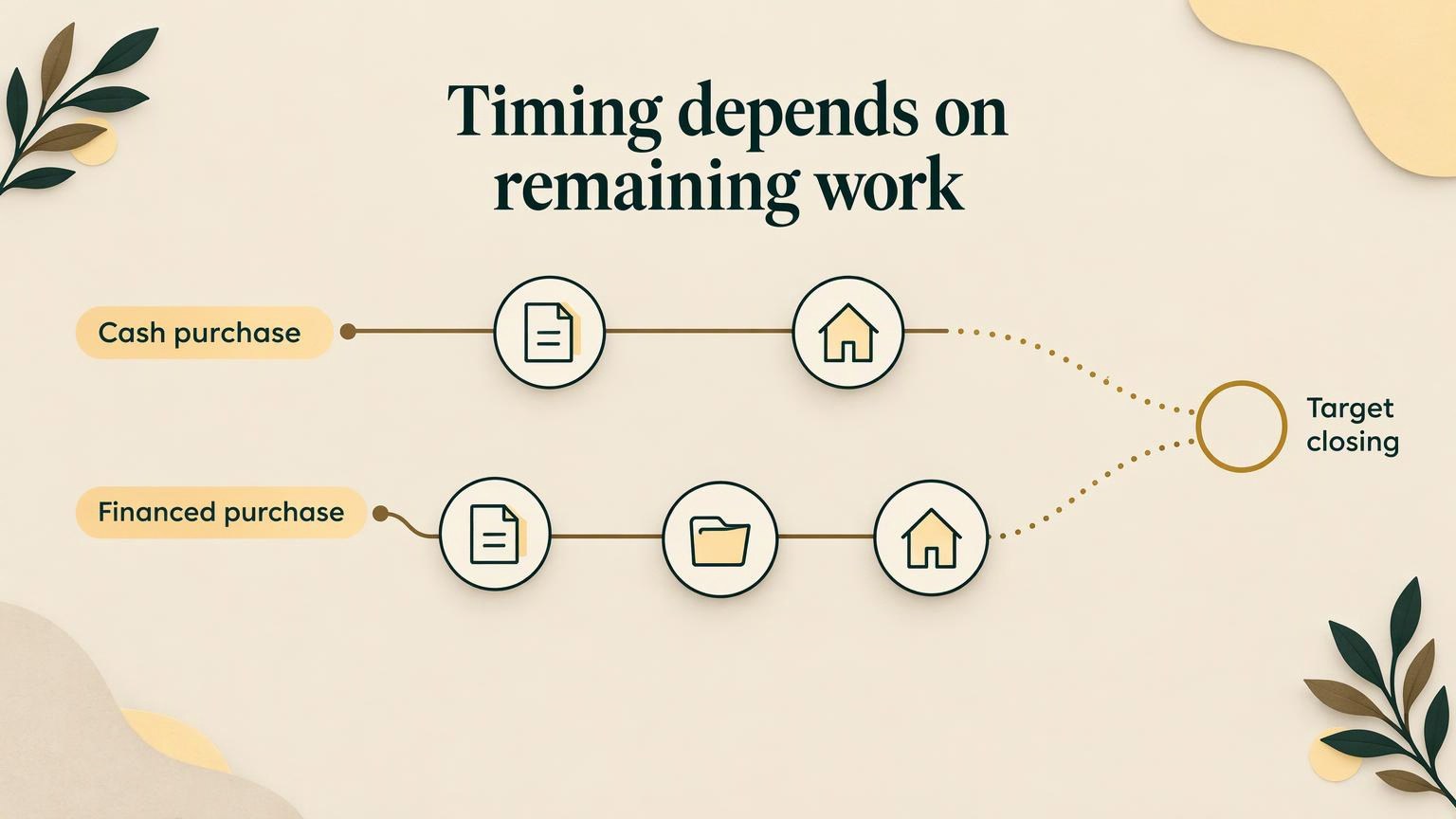
Illustration comparing cash and financed purchase paths, with outlined icon nodes and dotted final connections to a hollow circle labeled Target closing.